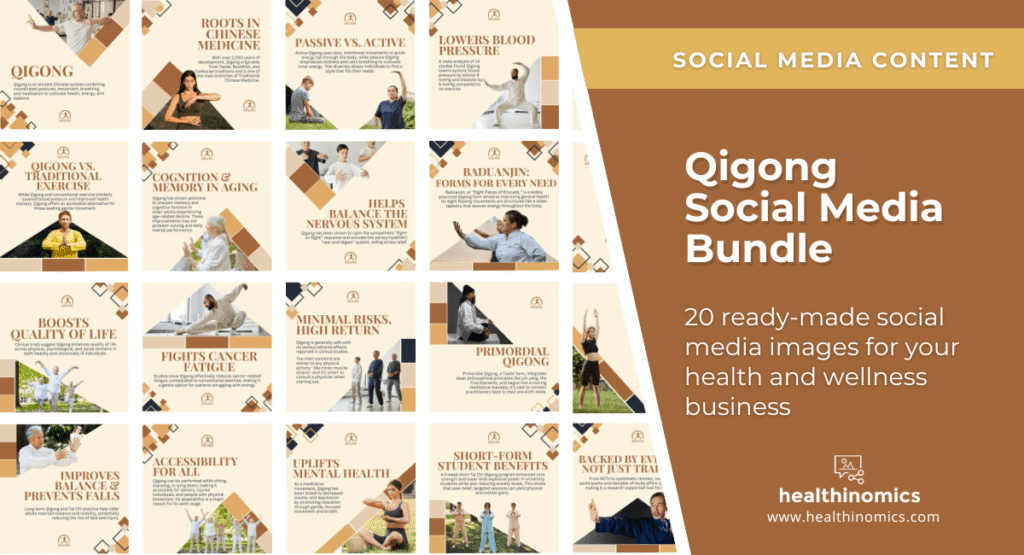
Qigong is a traditional Chinese practice that blends slow movement, controlled breathing, and mindful focus to restore balance and improve well-being. It plays an important role in shaping behavior by helping people manage stress, stay grounded, and build healthier routines. Sharing content about Qigong on social media is valuable because it introduces practical tools that many may not know about but can easily try in daily life. Simple practices, such as morning breathing exercises or gentle stretches, can help followers feel calmer, more energized, and more focused. Over time, these posts do more than just teach—they encourage conversations, spark interest in wellness, and build an online community where people support each other’s growth. By sharing Qigong, content creators make wellness accessible, inspiring meaningful changes that improve both mind and body.
Inside the Social Media Bundle
BONUS 20 sample captions for you to share with your bundle!
BONUS Editable Canva Template!
The Qigong Social Media bundle includes 20 beautiful pieces of visual content ready to share.

Social Media Image Content Ready To Share
1. What Is Qigong?
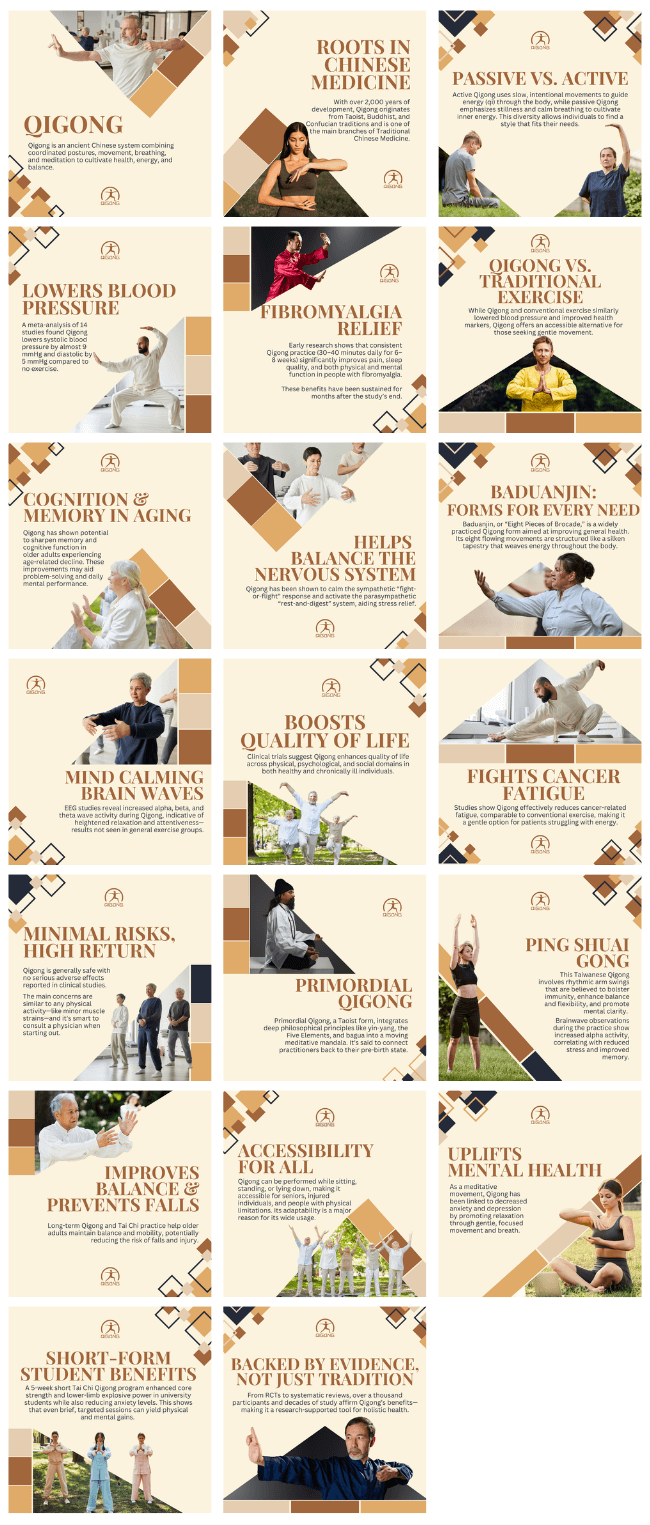
Qigong is an ancient Chinese system combining coordinated postures, movement, breathing, and meditation to cultivate health, energy, and balance.
2. Roots in Chinese Medicine
With over 2,000 years of development, Qigong originates from Taoist, Buddhist, and Confucian traditions and is one of the main branches of Traditional Chinese Medicine.
3. Passive VS. Active
Active Qigong uses slow, intentional movements to guide energy (qi) through the body, while passive Qigong emphasizes stillness and calm breathing to cultivate inner energy. This diversity allows individuals to find a style that fits their needs.
4. Lowers Blood Pressure
A meta-analysis of 14 studies found Qigong lowers systolic blood pressure by almost 9 mmHg and diastolic by 5 mmHg compared to no exercise.
5. Fibromyalgia Relief
Early research shows that consistent Qigong practice (30–40 minutes daily for 6–8 weeks) significantly improves pain, sleep quality, and both physical and mental function in people with fibromyalgia. These benefits have been sustained for months after the study’s end.
6. Qigong vs. Traditional Exercise
While Qigong and conventional exercise similarly lowered blood pressure and improved health markers, Qigong offers an accessible alternative for those seeking gentle movement.
7. Cognition & Memory in Aging
Qigong has shown potential to sharpen memory and cognitive function in older adults experiencing age-related decline. These improvements may aid problem-solving and daily mental performance.
8. Helps Balance the Nervous System
Qigong has been shown to calm the sympathetic “fight-or-flight” response and activate the parasympathetic “rest-and-digest” system, aiding stress relief.
9. Baduanjin: Forms for Every Need
Baduanjin, or “Eight Pieces of Brocade,” is a widely practiced Qigong form aimed at improving general health. Its eight flowing movements are structured like a silken tapestry that weaves energy throughout the body.
10. Mind Calming Brain Waves
EEG studies reveal increased alpha, beta, and theta wave activity during Qigong, indicative of heightened relaxation and attentiveness—results not seen in general exercise groups.
11. Boosts Quality of Life
Clinical trials suggest Qigong enhances quality of life across physical, psychological, and social domains in both healthy and chronically ill individuals.
12. Fights Cancer Fatigue
Studies show Qigong effectively reduces cancer-related fatigue, comparable to conventional exercise, making it a gentle option for patients struggling with energy.
13. Minimal Risks, High Return
Qigong is generally safe with no serious adverse effects reported in clinical studies. The main concerns are similar to any physical activity—like minor muscle strains—and it’s smart to consult a physician when starting out.
14. Primordial Qigong
Primordial Qigong, a Taoist form, integrates deep philosophical principles like yin-yang, the Five Elements, and bagua into a moving meditative mandala. It’s said to connect practitioners back to their pre-birth state.
15. Ping Shuai Gong
This Taiwanese Qigong involves rhythmic arm swings that are believed to bolster immunity, enhance balance and flexibility, and promote mental clarity. Brainwave observations during the practice show increased alpha activity, correlating with reduced stress and improved memory.
16. Improves Balance & Prevents Falls
Long-term Qigong and Tai Chi practice helps older adults maintain balance and mobility, potentially reducing the risk of falls and injury.
17. Accessibility for All
Qigong can be performed while sitting, standing, or lying down, making it accessible for seniors, injured individuals, and people with physical limitations. Its adaptability is a major reason for its wide usage.
18. Uplifts Mental Health
As a meditative movement, Qigong has been linked to decreased anxiety and depression by promoting relaxation through gentle, focused movement and breath.
19. Short-Form Student Benefits
A 5-week short Tai Chi Qigong program enhanced core strength and lower-limb explosive power in university students while also reducing anxiety levels. This shows that even brief, targeted sessions can yield physical and mental gains.
20. Backed by Evidence, Not Just Tradition
From RCTs to systematic reviews, over a thousand participants and decades of study affirm Qigong’s benefits—making it a research-supported tool for holistic health.