
Supporting hormonal balance means taking steps to keep the body’s hormones stable so they can regulate energy, sleep, mood, metabolism, and overall health. When hormones are out of balance, people may experience fatigue, stress, mood swings, or difficulty focusing, which can shape daily behavior in powerful ways.
Sharing educational posts about supporting hormonal balance on social media is essential because it gives followers practical tools they can use to feel better—like eating nutrient-rich foods, getting enough rest, or managing stress with simple routines. These small but meaningful hacks can inspire followers to make healthier choices and understand their bodies on a deeper level. Over time, posts like these help create an online community that values self-care and encourages open conversations about wellness. By raising awareness, content creators can empower their audience to make positive lifestyle changes that support long-term health and balance.
Inside the Social Media Bundle
BONUS 20 sample captions for you to share with your bundle!
BONUS Editable Canva Template!
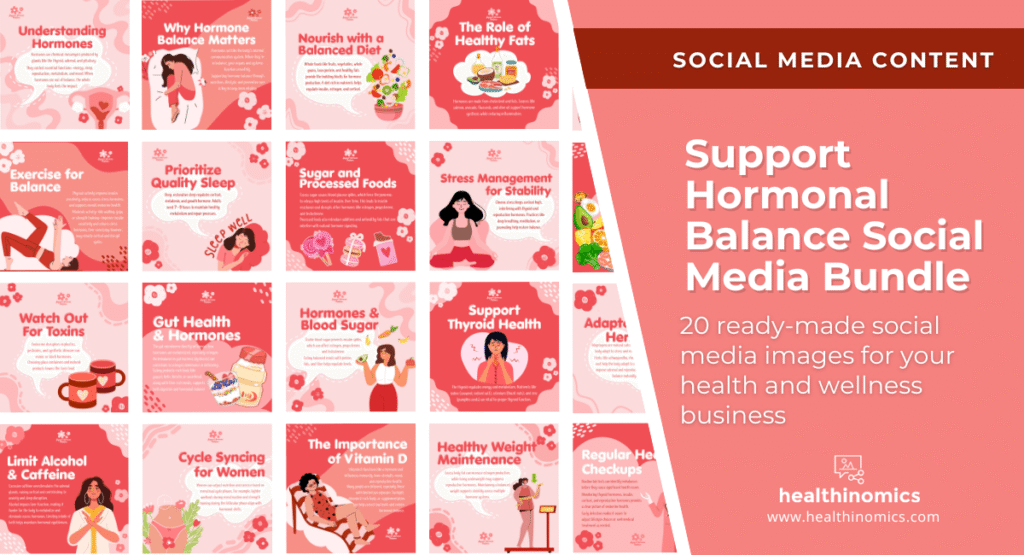
The Support Hormonal Balance Social Media bundle includes 20 beautiful pieces of visual content ready to share.
Social Media Image Content Ready To Share
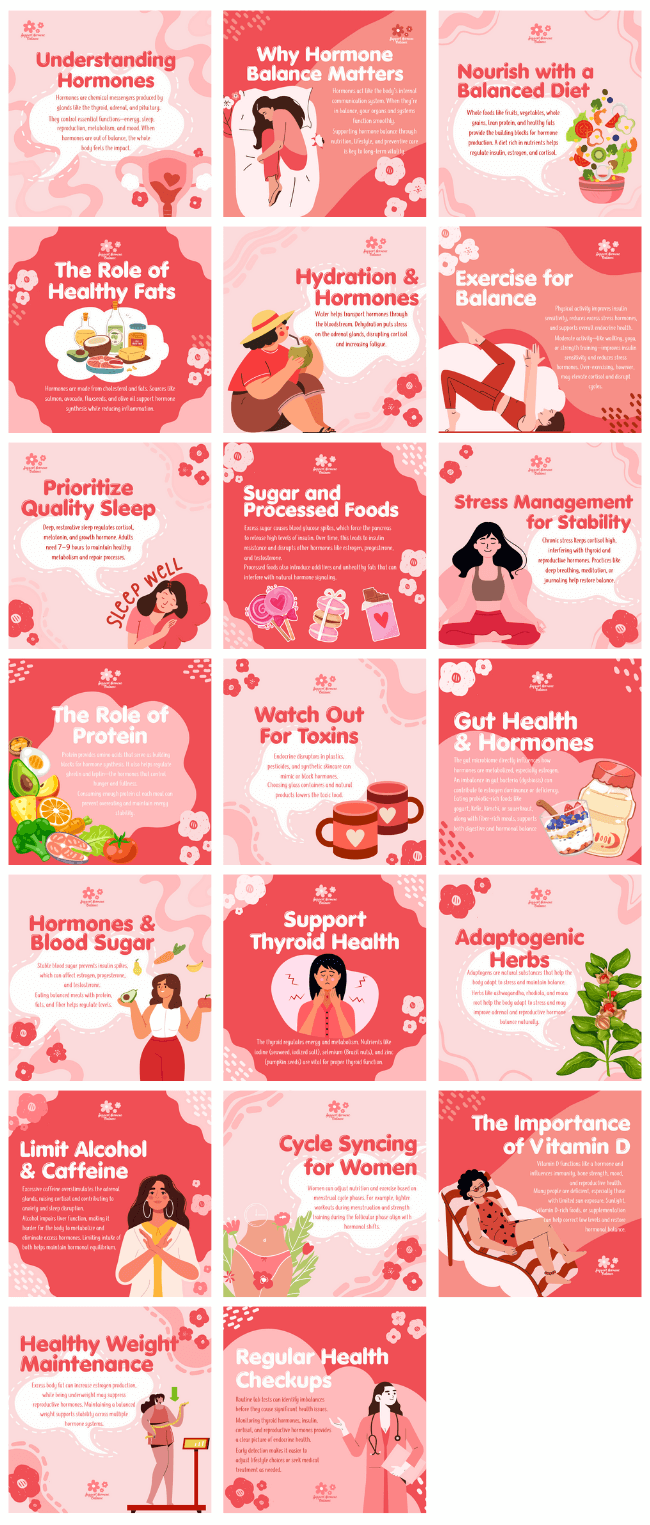
- What Are Hormones?
Hormones are chemical messengers produced by glands like the thyroid, adrenal, and pituitary. They control essential functions—energy, sleep, reproduction, metabolism, and mood. When hormones are out of balance, the whole body feels the impact. - Why Hormone Balance Matters
Hormones act like the body’s internal communication system. When they’re in balance, your organs and systems function smoothly. Supporting hormone balance through nutrition, lifestyle, and preventive care is key to long-term vitality. - Nourish with a Balanced Diet
Whole foods like fruits, vegetables, whole grains, lean protein, and healthy fats provide the building blocks for hormone production. A diet rich in nutrients helps regulate insulin, estrogen, and cortisol. - The Role of Healthy Fats
Hormones are made from cholesterol and fats. Sources like salmon, avocado, flaxseeds, and olive oil support hormone synthesis while reducing inflammation. - Hydration & Hormones
Water helps transport hormones through the bloodstream. Dehydration puts stress on the adrenal glands, disrupting cortisol and increasing fatigue. - Exercise For Balance
Physical activity improves insulin sensitivity, reduces excess stress hormones, and supports overall endocrine health. Moderate activity—like walking, yoga, or strength training—improves insulin sensitivity and reduces stress hormones. Over-exercising, however, may elevate cortisol and disrupt cycles. - Sugar and Processed Foods
Excess sugar causes blood glucose spikes, which force the pancreas to release high levels of insulin. Over time, this leads to insulin resistance and disrupts other hormones like estrogen, progesterone, and testosterone. Processed foods also introduce additives and unhealthy fats that can interfere with natural hormone signaling. - Prioritize Quality Sleep
Deep, restorative sleep regulates cortisol, melatonin, and growth hormone. Adults need 7–9 hours to maintain healthy metabolism and repair processes. - Stress Management for Stability
Chronic stress keeps cortisol high, interfering with thyroid and reproductive hormones. Practices like deep breathing, meditation, or journaling help restore balance. - The Role of Protein
Protein provides amino acids that serve as building blocks for hormone synthesis. It also helps regulate ghrelin and leptin—the hormones that control hunger and fullness. Consuming enough protein at each meal can prevent overeating and maintain energy stability. - Watch Out For Toxins
Endocrine disruptors in plastics, pesticides, and synthetic skincare can mimic or block hormones. Choosing glass containers and natural products lowers the toxic load. - Gut Health & Hormones
The gut microbiome directly influences how hormones are metabolized, especially estrogen. An imbalance in gut bacteria (dysbiosis) can contribute to estrogen dominance or deficiency. Eating probiotic-rich foods like yogurt, kefir, kimchi, or sauerkraut, along with fiber-rich meals, supports both digestive and hormonal balance. - Hormones and Blood Sugar
Stable blood sugar prevents insulin spikes, which can affect estrogen, progesterone, and testosterone. Eating balanced meals with protein, fats, and fiber helps regulate levels. - Support Thyroid Health
The thyroid regulates energy and metabolism. Nutrients like iodine (seaweed, iodized salt), selenium (Brazil nuts), and zinc (pumpkin seeds) are vital for proper thyroid function. - Adaptogenic Herbs
Adaptogens are natural substances that help the body adapt to stress and maintain balance. Herbs like ashwagandha, rhodiola, and maca root help the body adapt to stress and may improve adrenal and reproductive hormone balance naturally. - Limit Alcohol & Caffeine
Excessive caffeine overstimulates the adrenal glands, raising cortisol and contributing to anxiety and sleep disruption. Alcohol impairs liver function, making it harder for the body to metabolize and eliminate excess hormones. Limiting intake of both helps maintain hormonal equilibrium. - Cycle Syncing for Women
Women can adjust nutrition and exercise based on menstrual cycle phases. For example, lighter workouts during menstruation and strength training during the follicular phase align with hormonal shifts. - The Importance of Vitamin D
Vitamin D functions like a hormone and influences immunity, bone strength, mood, and reproductive health. Many people are deficient, especially those with limited sun exposure. Sunlight, vitamin D-rich foods, or supplementation can help correct low levels and restore hormonal balance. - Healthy Weight Maintenance
Excess body fat can increase estrogen production, while being underweight may suppress reproductive hormones. Maintaining a balanced weight supports stability across multiple hormone systems. - Regular Health Checkups
Routine lab tests can identify imbalances before they cause significant health issues. Monitoring thyroid hormones, insulin, cortisol, and reproductive hormones provides a clear picture of endocrine health. Early detection makes it easier to adjust lifestyle choices or seek medical treatment as needed.

- Includes 20 ready-made Images
- All images are high resolution PNG
- Includes fully editable Canva template
- Includes 20 social media post captions
- Add your own branding!

Share this:
- Includes 20 ready-made Images
- All images are high resolution PNG
- Includes fully editable Canva template
- Includes 20 social media post captions
- Add your own branding!