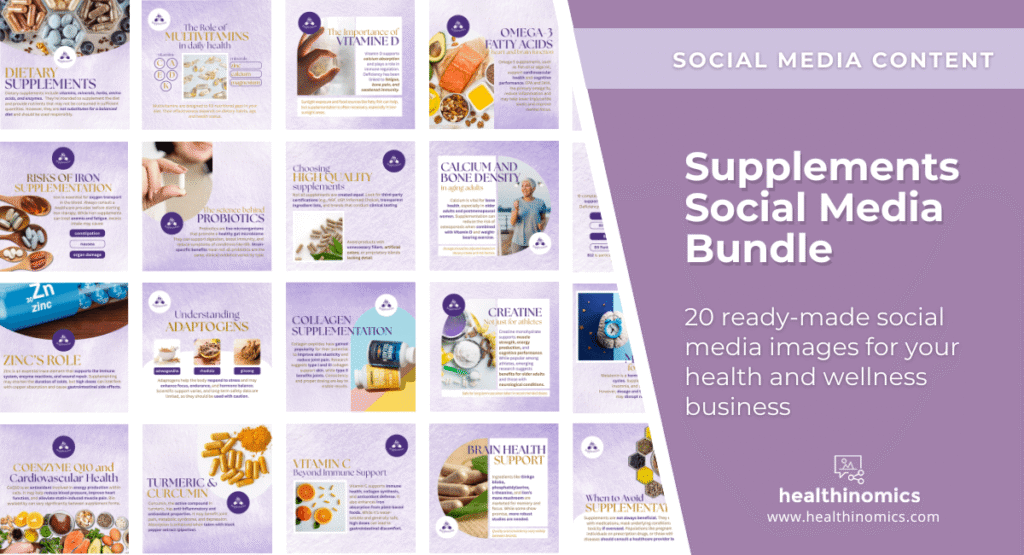
Supplements are products that contain essential nutrients like vitamins, minerals, herbs, or amino acids, and they’re often used to support overall health, fill nutritional gaps, or address specific wellness goals. Sharing educational content about supplements on social media helps your audience make informed choices about what their body needs.
Many people are curious about supplements but unsure where to start, and posts that explain their benefits, how to use them safely, or what to watch out for can clear up confusion. By breaking down complex topics into easy-to-understand tips, you empower your followers to take charge of their health. This kind of content not only spreads awareness but also fosters a community where people feel supported, motivated, and inspired to prioritize their well-being.
Inside the Social Media Bundle
BONUS 20 sample captions for you to share with your bundle!
BONUS Editable Canva Template!
The Supplements Social Media bundle includes 20 beautiful pieces of visual content ready to share.

Social Media Image Content Ready To Share
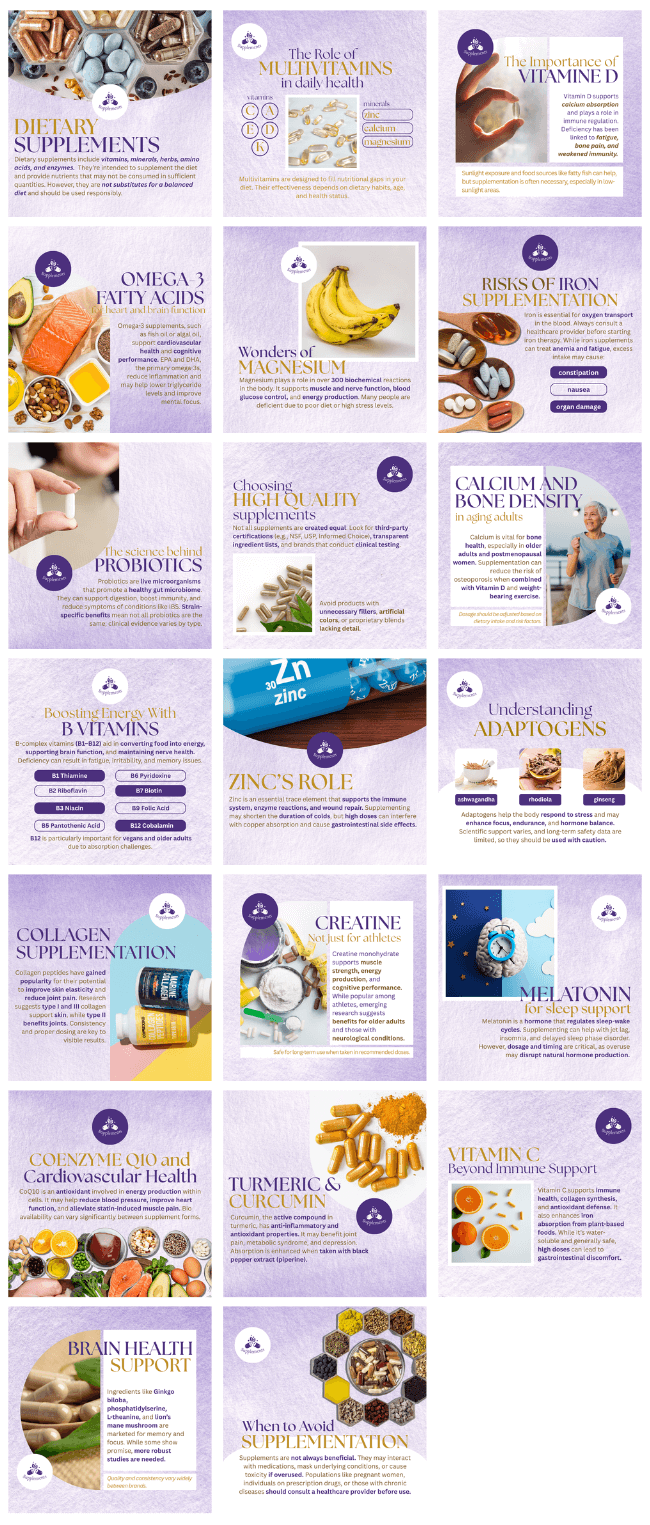
1. Understanding Dietary Supplements
Dietary supplements include vitamins, minerals, herbs, amino acids, and enzymes. They’re intended to supplement the diet and provide nutrients that may not be consumed in sufficient quantities. However, they are not substitutes for a balanced diet and should be used responsibly.
2. The Role of Multivitamins in Daily Health
Multivitamins are designed to fill nutritional gaps in your diet. They typically contain essential vitamins like A, C, D, E, and K, and minerals like magnesium, zinc, and calcium. Their effectiveness depends on dietary habits, age, and health status.
3. The Importance of Vitamin D
Vitamin D supports calcium absorption and plays a role in immune regulation. Deficiency has been linked to fatigue, bone pain, and weakened immunity. Sunlight exposure and food sources like fatty fish can help, but supplementation is often necessary, especially in low-sunlight areas.
4. Omega-3 Fatty Acids for Heart and Brain Function
Omega-3 supplements, such as fish oil or algal oil, support cardiovascular health and cognitive performance. EPA and DHA, the primary omega-3s, reduce inflammation and may help lower triglyceride levels and improve mental focus.
5. Wonders of Magnesium
Magnesium plays a role in over 300 biochemical reactions in the body. It supports muscle and nerve function, blood glucose control, and energy production. Many people are deficient due to poor diet or high stress levels.
6. Risks of Iron Supplementation
Iron is essential for oxygen transport in the blood. While iron supplements can treat anemia and fatigue, excess intake may cause constipation, nausea, and organ damage. Always consult a healthcare provider before starting iron therapy.
7. The Science Behind Probiotics
Probiotics are live microorganisms that promote a healthy gut microbiome. They can support digestion, boost immunity, and reduce symptoms of conditions like IBS. Strain-specific benefits mean not all probiotics are the same; clinical evidence varies by type.
8. Choosing High-Quality Supplement
Not all supplements are created equal. Look for third-party certifications (e.g., NSF, USP, Informed Choice), transparent ingredient lists, and brands that conduct clinical testing. Avoid products with unnecessary fillers, artificial colors, or proprietary blends lacking detail.
9. Calcium and Bone Density in Aging Adults
Calcium is vital for bone health, especially in older adults and postmenopausal women. Supplementation can reduce the risk of osteoporosis when combined with Vitamin D and weight-bearing exercise. Dosage should be adjusted based on dietary intake and risk factors.
10. Boosting Energy with B Vitamins
B-complex vitamins (B1–B12) aid in converting food into energy, supporting brain function, and maintaining nerve health. Deficiency can result in fatigue, irritability, and memory issues. B12 is particularly important for vegans and older adults due to absorption challenges.
11. Zinc’s Role
Zinc is an essential trace element that supports the immune system, enzyme reactions, and wound repair. Supplementing may shorten the duration of colds, but high doses can interfere with copper absorption and cause gastrointestinal side effects.
12. Understanding Adaptogens
Adaptogens like ashwagandha, rhodiola, and ginseng help the body respond to stress and may enhance focus, endurance, and hormone balance. Scientific support varies, and long-term safety data are limited, so they should be used with caution.
13. Collagen Supplementation
Collagen peptides have gained popularity because of their potential to improve skin elasticity and reduce joint pain. Research suggests that type I and III collagen support skin, while type II benefits joints. Consistency and proper dosing are key to visible results.
14. Creatine: Not Just for Athletes
Creatine monohydrate supports muscle strength, energy production, and cognitive performance. While popular among athletes, emerging research suggests benefits for older adults and those with neurological conditions. Safe for long-term use when taken in recommended doses.
15. Melatonin for Sleep Support
Melatonin is a hormone that regulates sleep-wake cycles. Supplementing can help with jet lag, insomnia, and delayed sleep phase disorder. However, dosage and timing are critical, as overuse may disrupt natural hormone production.
16. Coenzyme Q10 and Cardiovascular Health
CoQ10 is an antioxidant involved in energy production within cells. It may help reduce blood pressure, improve heart function, and alleviate statin-induced muscle pain. Bioavailability can vary significantly between supplement forms.
17. Turmeric and Curcumin
Curcumin, the active compound in turmeric, has anti-inflammatory and antioxidant properties. It may benefit joint pain, metabolic syndrome, and depression. Absorption is enhanced when taken with black pepper extract (piperine).
18. Vitamin C Beyond Immune Support
Vitamin C supports immune health, collagen synthesis, and antioxidant defense. It also enhances iron absorption from plant-based foods. While it’s water-soluble and generally safe, high doses can lead to gastrointestinal discomfort.
19. Brain Health Support
Ingredients like Ginkgo biloba, phosphatidylserine, L-theanine, and lion’s mane mushroom are marketed for memory and focus. While some show promise, more robust studies are needed. Quality and consistency vary widely between brands.
20. When to Avoid Supplementation
Supplements are not always beneficial. They may interact with medications, mask underlying conditions, or cause toxicity if overused. Populations like pregnant women, individuals on prescription drugs, or those with chronic diseases should consult a healthcare provider before use.